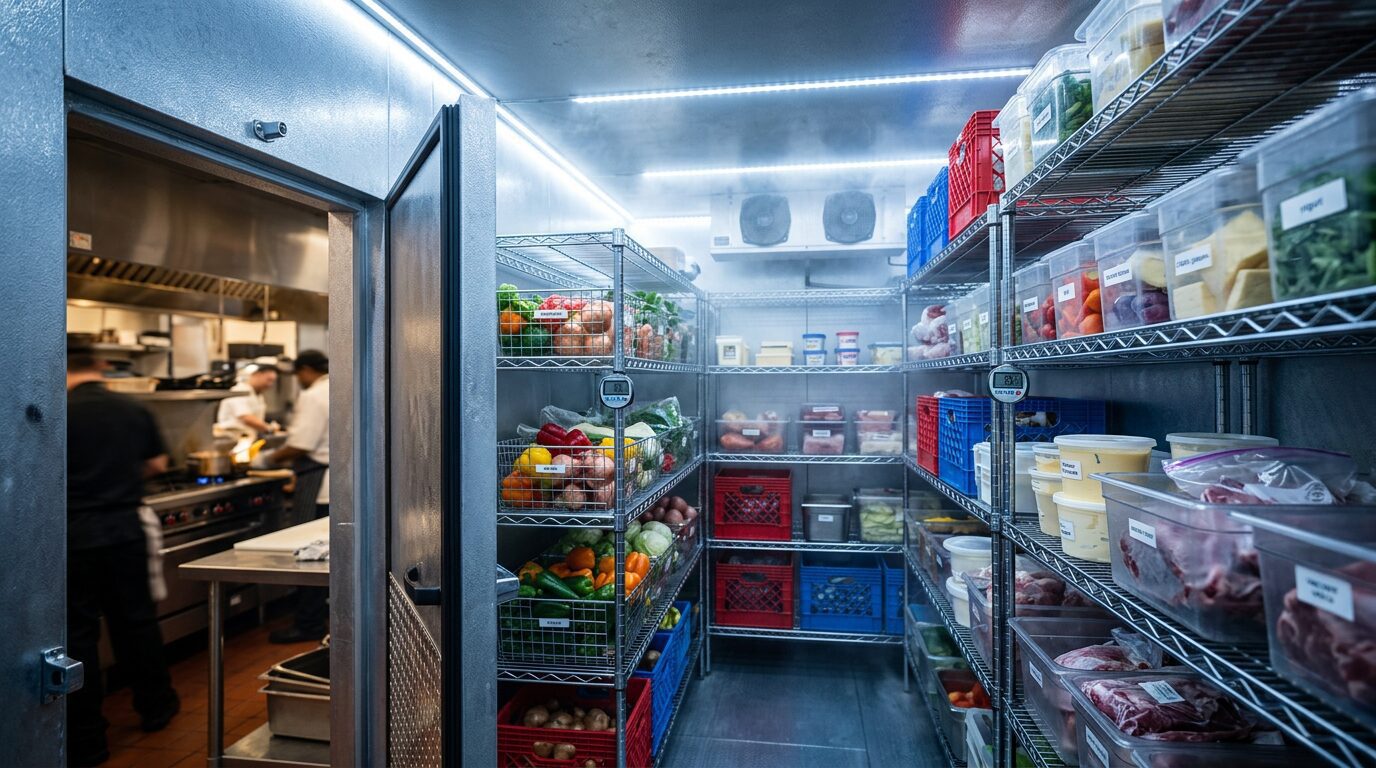
Key Takeaways
- Maintain 2-3 inch gaps around stored items to ensure proper airflow and consistent cooling throughout the unit.
- Position frequently accessed items near the entrance to reduce time spent inside and minimize temperature fluctuations.
- Use adjustable, NSF-certified wire shelving to accommodate varying product heights and improve air circulation.
- Implement a top-to-bottom food hierarchy system to prevent cross-contamination while maximizing vertical storage space.
- Install caster-mounted shelving for easy repositioning, allowing flexible layouts that balance storage capacity with traffic flow.
Understanding the Benefits of Commercial Walk-In Refrigerators
When you’re looking to maximize cold storage capacity, commercial walk-in refrigerators deliver considerable advantages over standard reach-in units. You’ll gain notably more storage capacity, allowing you to accommodate larger inventories without cluttering your workspace with multiple smaller coolers.
A well-designed commercial walk-in refrigerator maintains consistent temperatures throughout the unit, helping you meet strict food safety regulations while protecting your perishable inventory. You can customize these systems to match your specific operational needs, optimizing both layout and workflow efficiency, a core focus of All Southern Fabricators’ custom refrigeration solutions.
Energy efficiency is another essential benefit you’ll appreciate. Commercial walk-in refrigerators minimize temperature fluctuations caused by frequent door openings, reducing overall energy consumption compared to operating several reach-in coolers. This translates to long-term cost savings while enhancing your team’s productivity and process efficiency. When All Southern Fabricators designs a custom commercial walk-in refrigerator, energy performance and durability are always part of the plan.
Assessing Your Storage Needs and Available Space
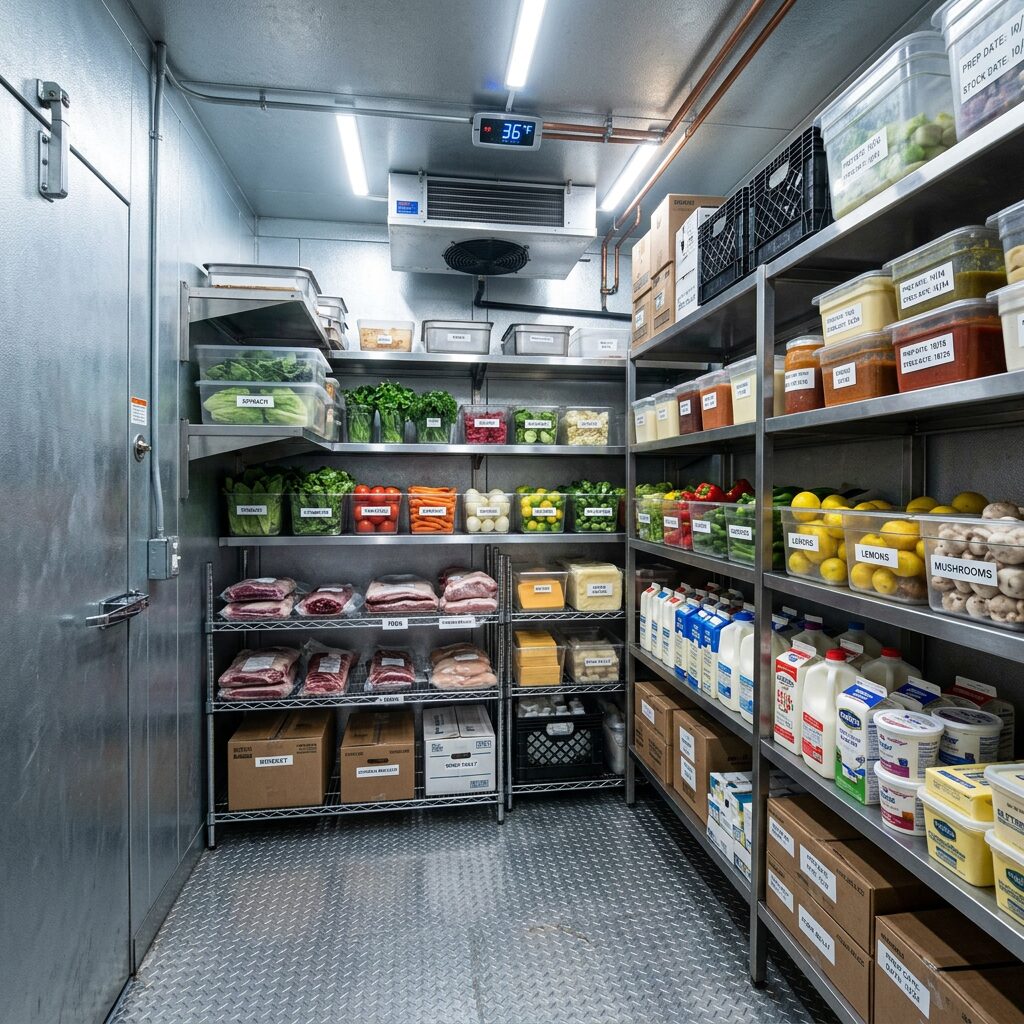
Before investing in a commercial walk-in refrigerator, you’ll need to evaluate both your inventory volume and the physical space available for installation. Start by analyzing your storage requirements, considering the variability of your inventory and the specific temperature needs for different food categories.
When measuring your designated installation area, verify your commercial walk-in refrigerator or freezer fits without obstructing workflow or access points. You’ll want to account for proper air circulation by maintaining a two-to-three-inch gap around stored items for consistent cooling performance.
Partnering with commercial walk-in refrigerator specialists like All Southern Fabricators helps you create a customized layout that maximizes efficiency. Our team will help you balance storage capacity with traffic flow, confirming your staff can navigate the space effectively while meeting food safety standards and operational demands.
Strategic Layout and Organization Techniques
Although proper assessment ensures you’ve got the right-size walk-in refrigerator, strategic organization determines how effectively you’ll use that space.
| Strategy | Benefit |
|---|---|
| Top‑to‑bottom food hierarchy (prepared items above, raw meats below) | Prevents cross‑contamination |
| Wire shelving instead of solid | Enables consistent air circulation |
| 2–3-inch gaps around stored items | Maintains ideal cooling |
You’ll want to standardize item placement throughout your walk-in refrigerator. Create an organizational chart that your team can reference, reducing search time and streamlining inventory management. When everyone knows exactly where items belong, you’re building a system that works for your entire operation.
Choosing the Right Shelving and Storage Accessories
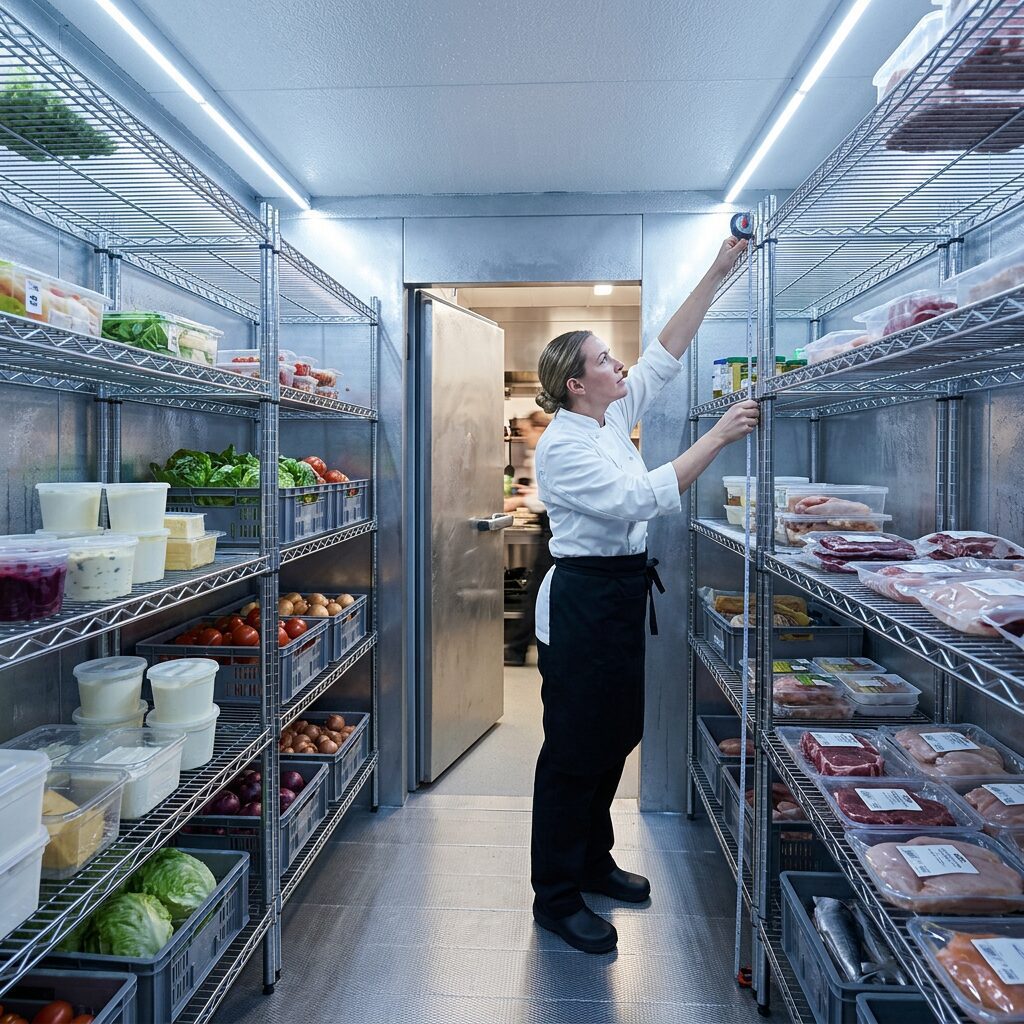
Selecting the right shelving materials directly impacts your walk-in refrigerator’s storage efficiency and food safety compliance. You’ll want to opt for NSF-certified options like welded wire, stainless steel, or plastic, each designed for easy cleaning and sanitation. Caster-mounted shelves give you flexibility to reposition units and access hard-to-reach areas during cleaning.
When organizing your walk-in refrigerators, place raw meats on lower shelves and prepared foods above to prevent cross-contamination. You should maintain a two-to-three-inch gap around stored items for proper air circulation and consistent cooling. Adjustable shelving lets you accommodate varying product heights while maximizing vertical storage space. These strategic choices guarantee you’re getting the most from your walk-in refrigerators while meeting industry standards your team can rely on.
Maintaining Efficiency and Maximizing Your Investment
To organize your walk-in effectively, implement a FIFO inventory system that rotates stock efficiently. Label all containers with production and expiration dates, and position delicate items away from evaporator fans to prevent damage.
Reducing energy consumption directly impacts your bottom line. Install motion detector lights and invest in energy-efficient refrigeration systems to cut operational costs. Keep door seals clean and intact to maintain consistent temperatures.
When you maintain proper airflow through strategic product placement and clean coils regularly, you’re joining countless successful operators who’ve maximized their cold storage investment.
Frequently Asked Questions
How to Organize a Commercial Walk-In Cooler?
You’ll want to store prepared items on top shelves and raw meats below to prevent cross-contamination. Label everything with dates, use wire shelving for airflow, and maintain six-inch floor clearance for proper sanitation.
What Are Common Problems With Walk-In Fridges?
You’ll encounter temperature fluctuations from frequent door openings, poor airflow from overpacking, condensation leading to mold, compressor failures requiring maintenance, and insufficient insulation causing energy waste, all issues that can compromise your storage efficiency.
How to Maximize Refrigerator Space?
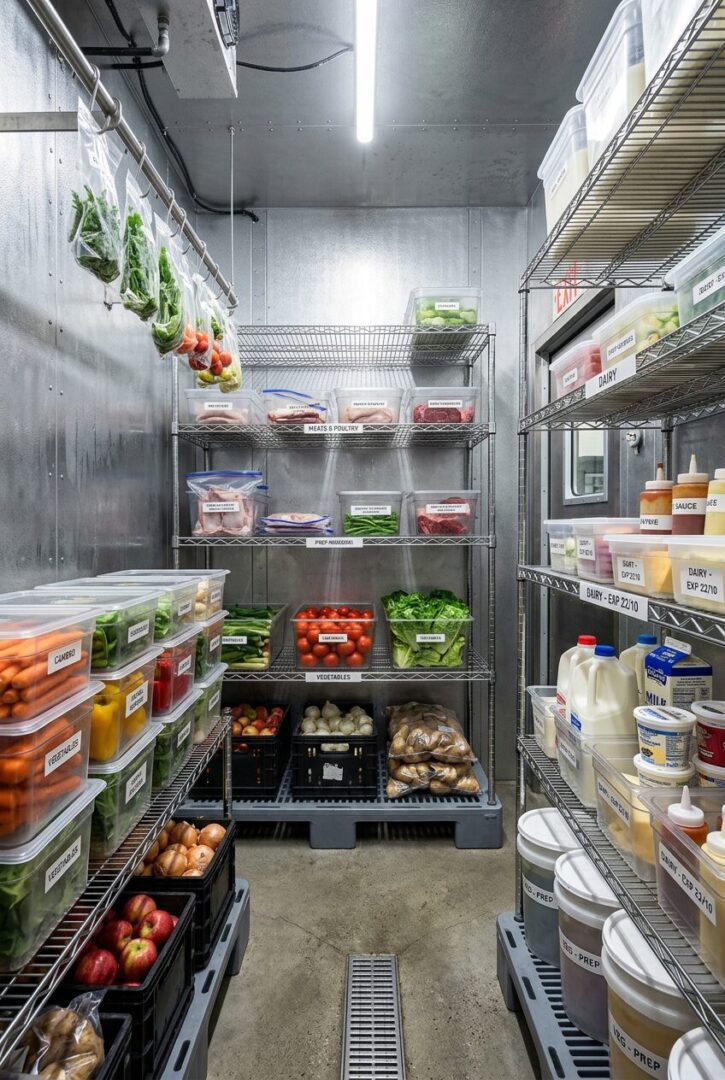
You’ll increase storage capacity by up to 30% when you install adjustable shelving and maintain proper two-to-three-inch gaps between items. Use wire shelving for better airflow and organize strategically; you’ve got this.
How Much Does a Commercial Walk-In Refrigerator Cost?
You’ll typically invest $3,000 to $10,000 for a commercial walk-in refrigerator, plus $1,000 to $5,000 for installation. Custom configurations cost more but let you maximize every square foot for your storage needs.